Where’s hot in Europe right now? If you’re after winter sun without a long-haul flight, the answer from November to March is almost always the Canary Islands, where daytime highs sit in the low 20s even in January. Further east, Cyprus, Malta, Sicily and Crete stay mild and sunny, with warm Novembers and springs that arrive weeks before ours.
All 11 of our picks are under five hours from the UK with direct flights, so they work for a half-term week or a quick escape from grey skies. Below you’ll find average temperatures by month, sea temperatures for paddling and swimming, and where we’d stay with kids.
The quick answer: for guaranteed warmth in December, January and February, head to Tenerife, Gran Canaria, Lanzarote or Fuerteventura. For November and March, the Mediterranean opens up, and Cyprus, Malaga and Malta become easy, shorter-flight options.

Where’s hot in Europe right now?
November: Tenerife (25°C), Gran Canaria, Lanzarote, Fuerteventura (24°C), Madeira and Cyprus (23°C)
December: Tenerife (23°C), Gran Canaria, Lanzarote and Fuerteventura (22°C), Madeira (21°C)
January and February: Tenerife (22°C), the other Canary Islands (21°C), Madeira (20°C) – the only reliably warm spots in Europe
March: the Canaries (22–23°C) plus Cyprus, Malaga and Madeira (20°C)
Warmest sea in winter: the Canary Islands, at around 19–20°C in January
Average winter temperatures in Europe by month
Average daily highs, warmest first. Tap a destination to jump straight to it.
| Destination | Nov | Dec | Jan | Feb | Mar | Sea (Jan) |
|---|---|---|---|---|---|---|
| Tenerife | 25°C | 23°C | 22°C | 22°C | 23°C | 20°C |
| Gran Canaria | 24°C | 22°C | 21°C | 21°C | 22°C | 20°C |
| Lanzarote | 24°C | 22°C | 21°C | 22°C | 23°C | 19°C |
| Fuerteventura | 24°C | 22°C | 21°C | 21°C | 22°C | 19°C |
| Madeira | 23°C | 21°C | 20°C | 20°C | 20°C | 19°C |
| Cyprus | 23°C | 19°C | 17°C | 18°C | 20°C | 18°C |
| Malaga | 20°C | 18°C | 17°C | 18°C | 20°C | 16°C |
| Malta | 21°C | 17°C | 16°C | 16°C | 17°C | 17°C |
| Sicily | 21°C | 17°C | 16°C | 16°C | 18°C | 16°C |
| Crete | 20°C | 17°C | 15°C | 16°C | 17°C | 17°C |
| Antalya, Turkey | 22°C | 17°C | 15°C | 16°C | 19°C | 18°C |
Average daily maximum air temperatures and January sea temperatures, from long-term climate averages. Expect cooler evenings, especially in December and January.
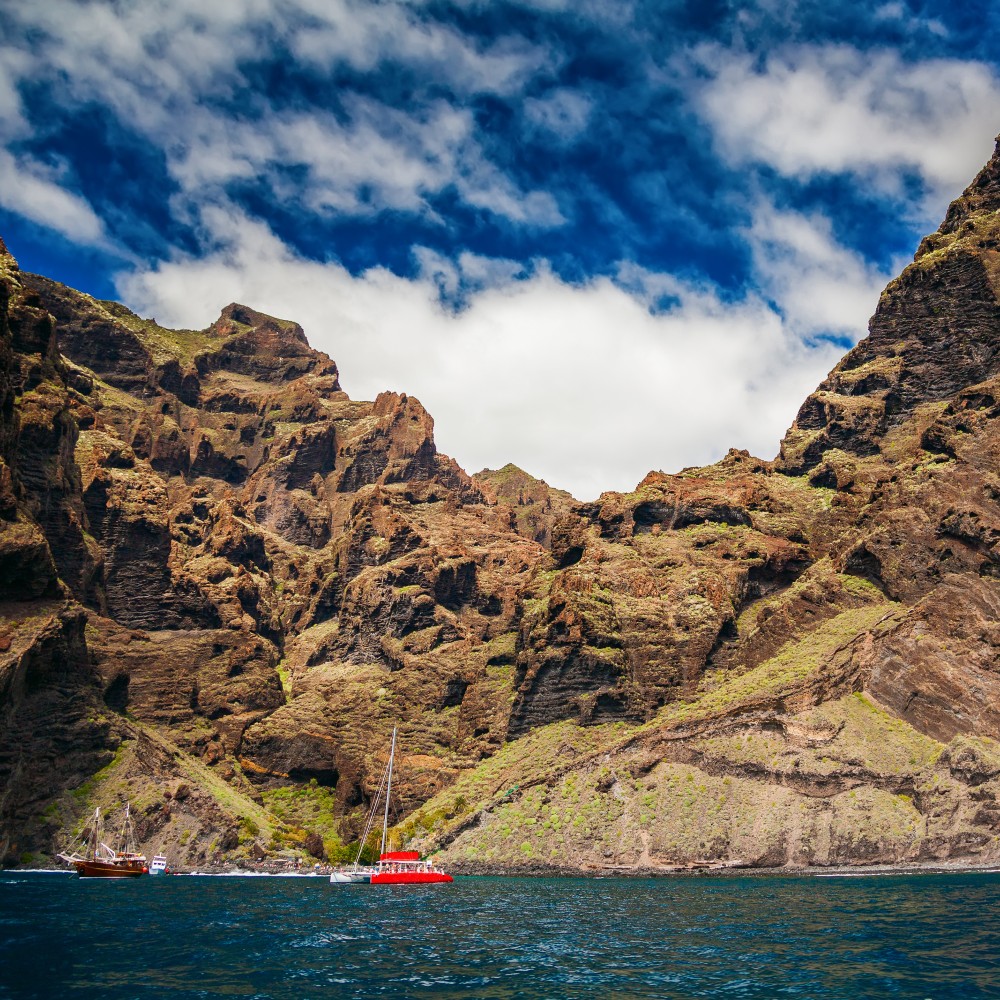
Playa de Masca, Tenerife
Tenerife: the warmest winter sun in Europe
Average highs: 25°C in November, 22°C in January, 23°C in March
Sea temperature: 22°C in November, 20°C in January
Direct UK flights: about 4 hours 30 minutes
Located just 300 km from the shores of Africa, Tenerife belongs to Spain’s Canary Islands. Southern Tenerife in December has highs of around 23˚C, seas warm enough to swim in and almost no crowds anywhere. It’s off-season, so there’s a chance some of the smaller attractions won’t be open. But big tickets like Siam Park are year-round and winter’s good for exploring the mountain towns and villages which can seem like a lot of effort with kids in high summer.
Bright and lively Christmas in Santa Cruz comes with colourful local events, cute markets, prettily decorated streets and lots of quaint customs. And winter’s the best time to get wild outdoors on this dramatic island. The fierce heat has cooled to manageable and rock climbing, hiking, walking and exploring in Mt. Teide National Park is fantastic fun – even for younger kids. Surf conditions are at their best at this time of year too, and the sheer cliffs at Los Gigantes on the west coast are spectacular from a boat. It’s also the season for driving around on peaceful roads so, even if you opt to stay in the slightly warmer south, Puerto de la Cruz and historic La Orotava are easy days out.
If you want somewhere quieter, Golf del Sur was one of the top-rated resort areas among British families who booked with loveholidays last winter, and it’s handy for Siam Park. The single highest-rated hotel for families across the Canaries was Ona Hollywood Mirage in Los Cristianos.
Where to stay: See our recommended family hotels in Tenerife
– READ MORE: Easy winter sun with babies and toddlers –
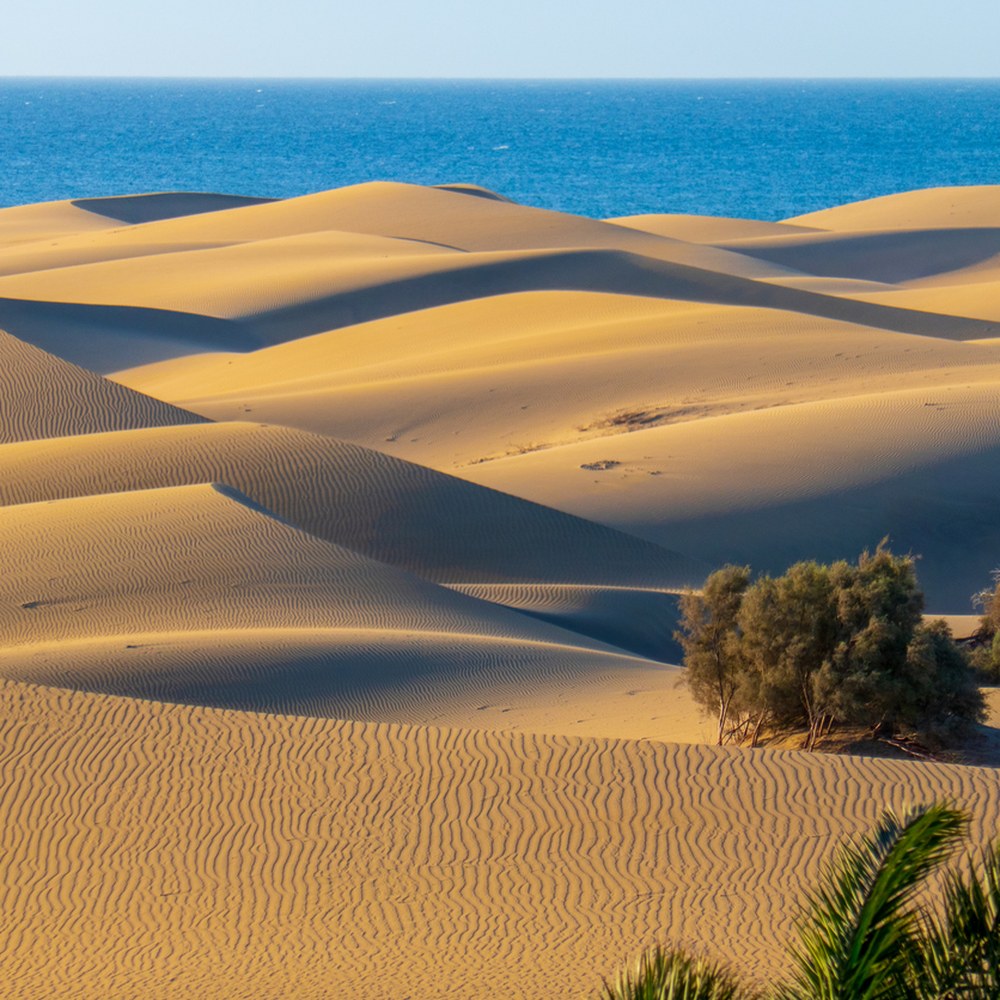
Maspalomas Dunes, Gran Canaria © iStock
Gran Canaria: best for beaches and dunes
Average highs: 24°C in November, 21°C in January, 22°C in March
Sea temperature: 22°C in November, 20°C in January
Direct UK flights: about 4 hours 30 minutes
Over 60km of beaches ring the coast of Gran Canaria, but don’t dismiss it as the summer Canary – winter temperatures are just as warm as Tenerife’s. It’s also home to around two in five of the archipelago’s residents and the island capital, Las Palmas, is Spain’s ninth-largest city – and almost reason enough on its own to holiday with kids in Gran Canaria. A lively, working city, it’s multi-cultural and full of character so there’s no shortage of places to see and things to do – even in January.
The shopping districts are irresistible and the old quarter, Vegueta, is delightfully atmospheric at Christmas. But, back to the beaches. Mostly golden, with a few black volcanic stretches, they’re strewn with vast dunes, as given to big waves as swimmable waters and kid-perfect in winter. For a complete contrast, head inland and it’s another island altogether, one that’s so mountainous and beautifully austere it’s hard to believe Las Palmas exists in the same world but easy to understand why they call Gran Canaria a, ‘continent in miniature’.
Families who’ve been rate it highly, too: Gran Canaria’s hotels got the highest average score of any Canary Island in reviews from British families who travelled with loveholidays last winter, and Playa del Inglés, with its beaches, waterparks and restaurants, was the top-rated resort area.
Where to stay: See our recommended family hotels in Gran Canaria
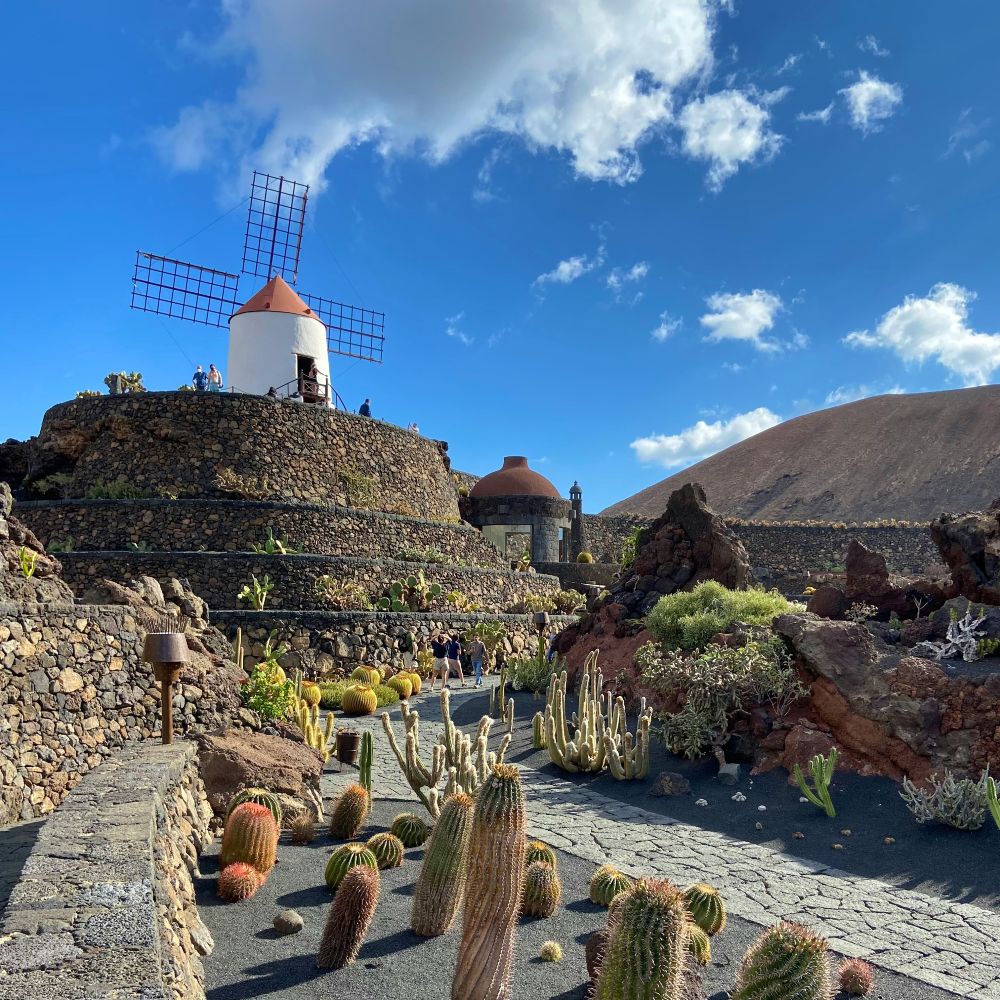
The Cactus Garden, Lanzarote
Lanzarote: best for volcanoes and underwater art
Average highs: 24°C in November, 21°C in January, 23°C in March
Sea temperature: 22°C in November, 19°C in January
Direct UK flights: about 4 hours
A firm favourite with families looking to catch some winter sun, Lanzarote is around 125 kilometres off the coast of Africa and benefits from a similar warm climate. Known as the island of volcanoes, Lanzarote has plenty of natural attractions to keep families entertained, such as Timanfaya National Park, where rangers pour water into the ground to make steam geysers erupt, and its rugged volcanic landscape to explore. Cueva de los Verdes offers secret tunnels made from solidified lava through which to take a guided tour, and a huge cactus garden in a former quarry is another example of Lanzarote’s natural beauty.
For older children and teens interested in water activities, Lanzarote has some of the most unique attractions in the world, including an underwater art gallery that can be explored in scuba gear. The sculptures at Museo Atlantico stand on the seabed, forming an artificial reef that attracts abundant marine wildlife. For those who prefer to stay above water, the clear waters of the coast are ideal for snorkelling. Fun watersports such as jet-skiing, banana boats and parasailing are all on offer for adventurous holidaymakers.
For landlubbers, Lanzarote has fun-filled days out such as the Rancho Texas Adventure Park containing a zoo, cowboy lasso displays and a gold mine, or the Museum of Piracy with sea-worthy exhibits that will fascinate kids and adults alike. Lanzarote has a wide selection of budget family apartments and luxury all-inclusive hotel resorts, and thanks to the cheap flights available it is a great holiday option for families on a variety of budgets. For a resort you can explore on foot, Puerto del Carmen, with its beaches, restaurants and promenade, was one of loveholidays’ top-rated areas for families last winter.
Where to stay: See our recommended family hotels in Lanzarote
– READ MORE: Why Lanzarote is the most endearing Canary Island –
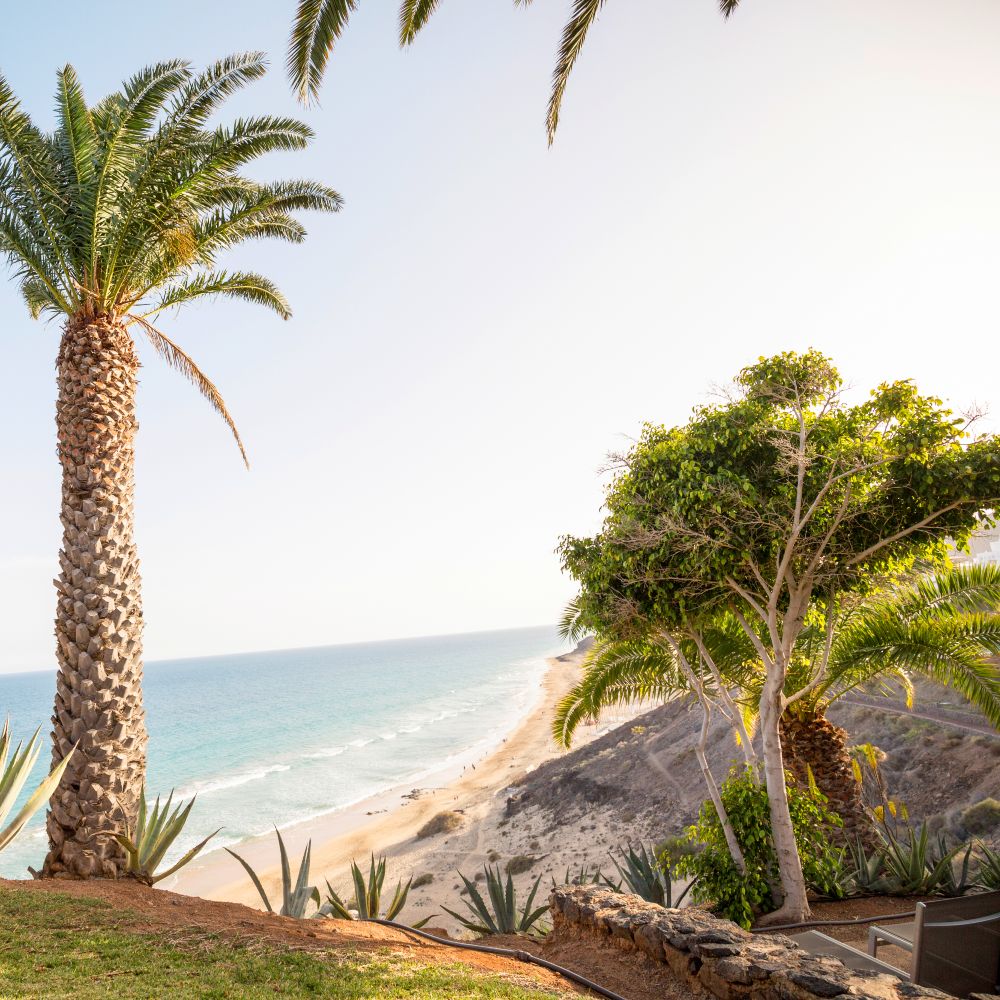
Beach, Fuerteventura, Canary Islands
Fuerteventura: best for sandy beaches
Average highs: 24°C in November, 21°C in January, 22°C in March
Sea temperature: 22°C in November, 19°C in January
Direct UK flights: about 4 hours
With over 150 kilometres of golden beaches, Fuerteventura is a great holiday destination for families looking for sun, sea and sand. The entire island was declared a UNESCO Biosphere Reserve in 2009 thanks to the volcanic landscape and unspoilt stretches of beach. Corralejo Natural Park in the north-east of the island is a popular place for visitors who flock to see the white sand-dunes and desert-like landscape of the protected area, which ends at the turquoise waters of the Atlantic Ocean.
La Concha beach, near El Cotillo, is one of the places in Fuerteventura where the sea is perfectly calm, and ideal for little ones to paddle.
If towns and history are more your thing, Betancuria Old Town has much to offer visiting families. The old capital sits in a valley in the west of the island and was founded in 1404 as a strategic location to defend itself against pirate attacks. Visiting its quaint churches and chapels is a great way to incorporate educational travel, and its small museums are worth a look with older children.
It’s also the best-value Canary Island for winter sun. TravelSupermarket found a family week there between November and March averaged £739 per person, 24% less than Tenerife – and an all-inclusive week in Fuerteventura (£850pp) cost less on average than B&B on Lanzarote, Gran Canaria or Tenerife.
“Fuerteventura is a great spot that’s often overlooked by its bigger neighbours, Tenerife and Gran Canaria,” says Phil Brown, Holiday Experience Manager at Sundeals, who has lived on Tenerife, Fuerteventura and Lanzarote. “Temperatures normally reach the early 20s in February, and it often offers much better value than the other Canaries. My top tip would be to stay up in the north in Corralejo. It’s one of the bigger resorts, so there’s loads for families to do, and you’re only a 35-minute ferry from Lanzarote, giving you a great-value day out and the chance to see two islands in one holiday.” Corralejo, with the sand dunes right on its doorstep, was also one of loveholidays’ top-rated resort areas for families last winter.
Where to stay: See our recommended family hotels in Fuerteventura
– READ MORE: Which Canary Island is right for your family? –
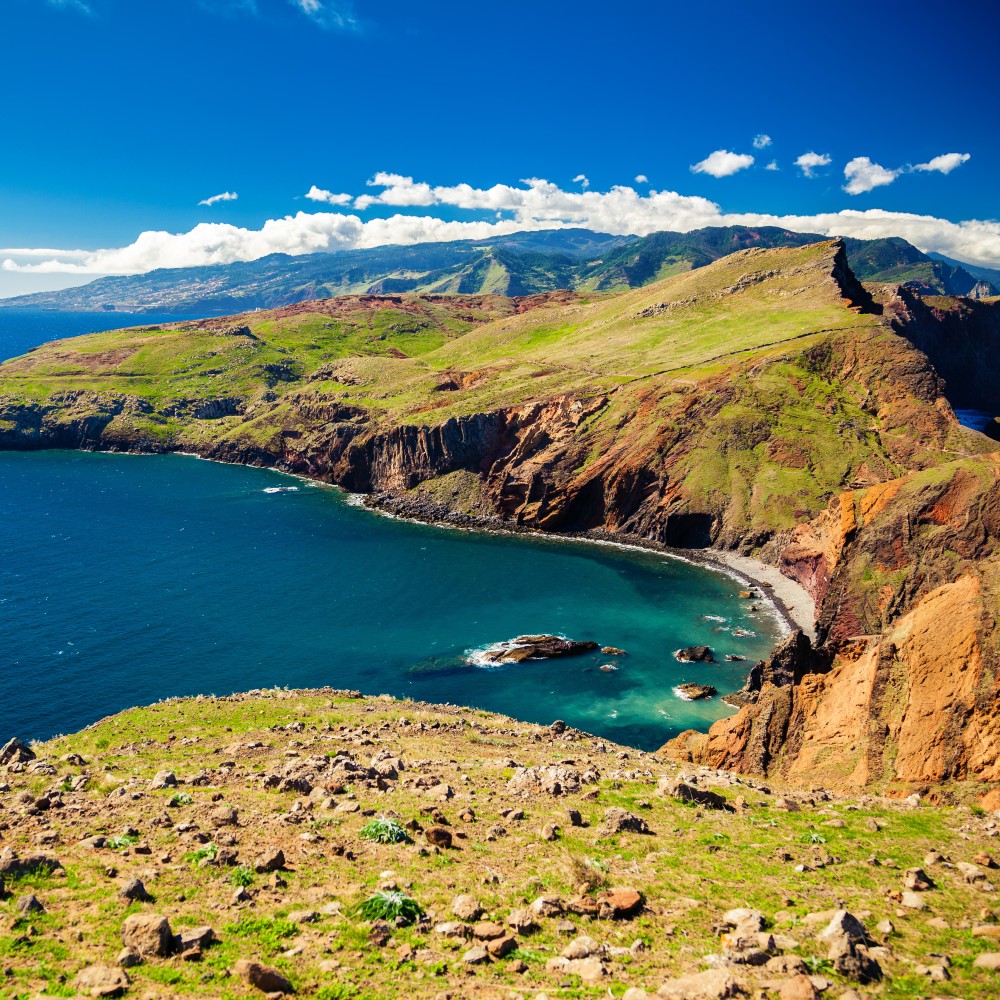
Madeira’s dramatic Atlantic coastline
Madeira: best for nature-loving families
Average highs: 23°C in November, 20°C in January, 20°C in March
Sea temperature: 21°C in November, 19°C in January
Direct UK flights: about 3 hours 45 minutes
Commonly thought of as a single island, Madeira is actually an archipelago off the north-west coast of Africa and was once described as “the most enviable island on earth, with every European comfort and almost every tropical luxury”. Families should spend at least a day in the capital, Funchal, where they can wander through the colourful town market, visit streets entirely decorated by local artists and ride the cable car up to Monte. From there, the classic way down is by wicker toboggan, steered by two drivers in straw hats (they originated here in the 19th century as a practical means of downhill transportation). For a sandy beach, head east to Machico, which has calm water for a swim.
Madeira is a small island so it is worth hiring a car to make the most of your time here; the north coast, in particular, lends itself to scenic road trips and impromptu picnics. Active families can enjoy hiking along the ‘levadas’, the irrigation channels that bring water down from the picturesque mountains, and wind through the world’s largest laurel forest, the UNESCO World Heritage Laurisilva forest. Water babies can also experience the natural saltwater pools found in Porto Moniz in the north and enjoy a whale and dolphin watching boat trip. Madeira is also a well-known gastronomic hub, with the area producing a tasty selection of sought-after local goods. Why not try honey cakes, espada (black scabbardfish) with banana and passion fruit or rustic fried corn?
Christmas is a lovely time to visit with kids. Funchal switches on its Christmas lights on 1 December, with music and entertainment, and Traditional Christmas Nights bring music and local food to towns and villages from 9 to 23 December, peaking with Market Night around Funchal’s Farmers’ Market on 23 December. Stay for New Year and you’ll see the fireworks over Funchal Bay, which set a Guinness World Record as the world’s largest display in 2006.
– READ MORE: 10 tips for Christmas away from home with kids –
Where to stay: See our recommended family hotels in Madeira
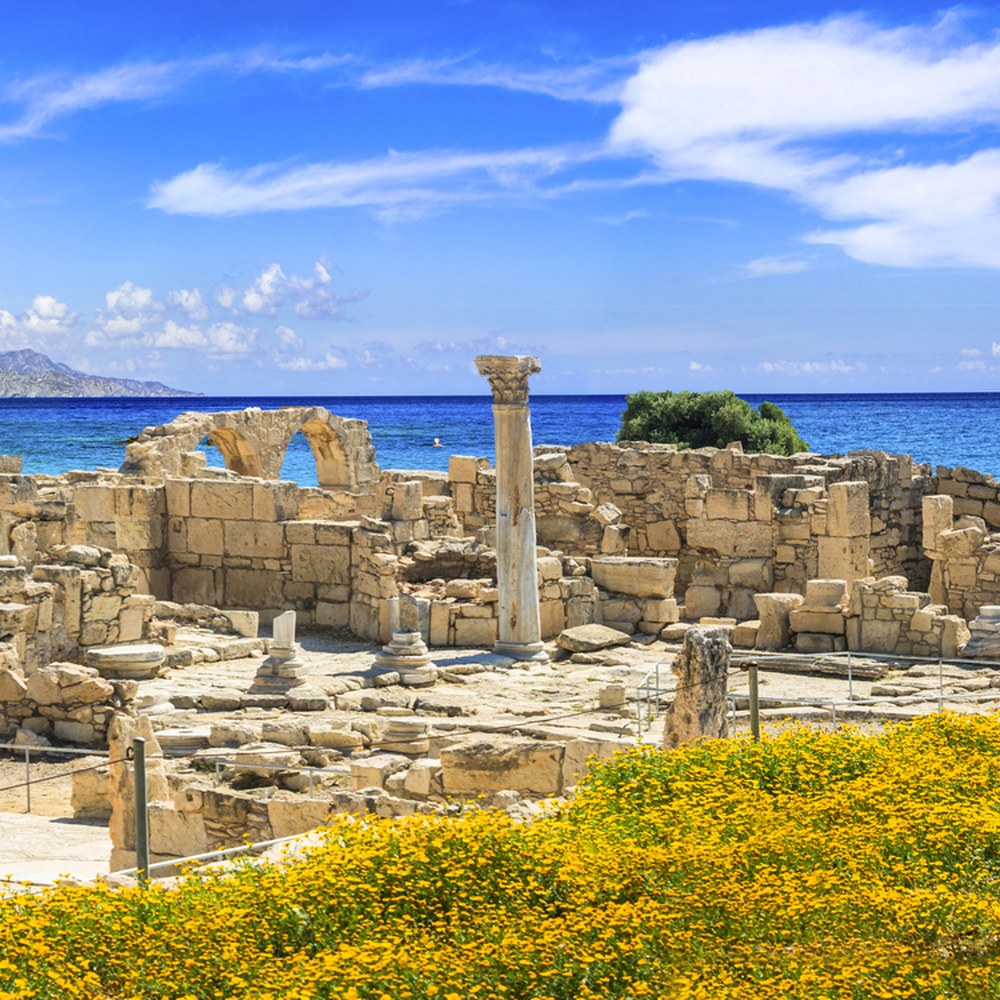
Kourion archaeological site, Cyprus © iStock
Cyprus: best for history and hiking
Average highs: 23°C in November, 17°C in January, 20°C in March
Sea temperature: 22°C in November, 18°C in January
Direct UK flights: about 4 hours 30 minutes
Cyprus is gorgeous in summer but baking hot, so hot it’s almost impossible to peel yourself away from the beaches and, beautiful as they are, they’re far from all there is to this rich and complex country. Visit in winter and the sun still shines, but it’s cool enough to climb ranging peaks, wooded foothills and ramble endless coastal paths and historic trails – kids are always thrilled by how easy it is to reach great heights, disappear behind waterfalls, discover hidden caves and have almost complete freedom to explore.
Then there are all the ancient Phoenician, Roman, Byzantine, Venetian and Islamic sites to see: more astonishing without herds of tourists. The cities are a pleasure too and still good and lively off-season, just a little more local and easier to enjoy – you forget how historic even bustling Larnaka is until you have room to look closely at icons like the Church of Agios Lazaros or the wonderful Pierides Museum. But what kids really love about Cyprus, is how much Cyprus loves kids and includes them in everything from local winter festivals to New Year celebrations.
Where to stay: See our recommended family hotels in Paphos, Cyprus, or read our review of the Imperial Island Resort
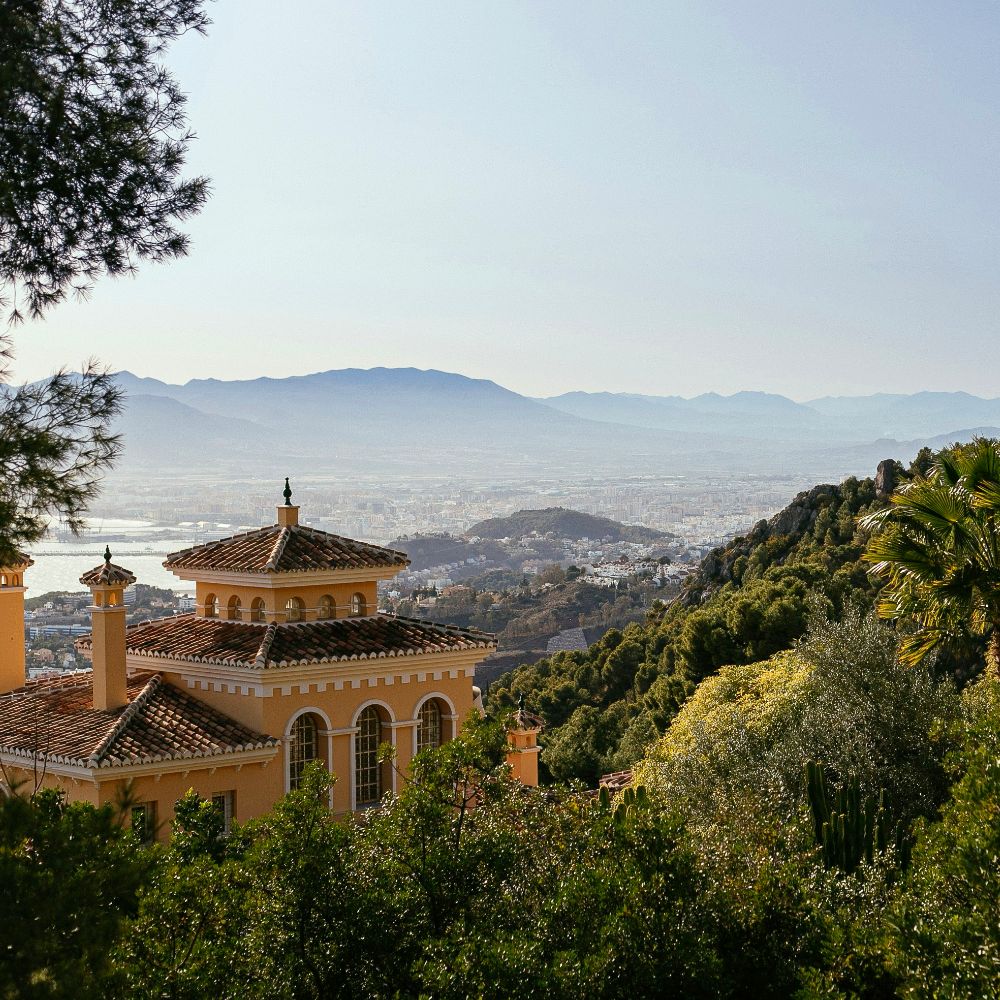
Malaga, Costa del Sol, Spain
Malaga: best for a short flight
Average highs: 20°C in November, 17°C in January, 20°C in March
Sea temperature: 18°C in November, 16°C in January
Direct UK flights: about 2 hours 55 minutes
Malaga in Spain is an incredible city which just happens to sit on one of the most popular and packed summer coastlines in Europe. Take the kids in winter and you’ll be amazed by how historic, charming and lovely it is without the crowds. Picasso was born here and Museo Picasso is fascinating – the ancient building is almost as stunning as the art. But there’s also a Pompidou Centre, CAC Malaga, Museo Carmen Thyssen and over 20 other astonishing museums: testimony to the millions Malaga’s invested in its cultural heritage over the past decade.
Naturally, the big sandy beaches are pretty much unchanged all year round, so you can lie in the sun and, if you’re brave, take a dip in the sea, you just don’t have to share quite as much. And if you long for Andalusian cooking but doubt it’s ever authentic on the Costa del Sol, Malaga’s more than happy to prove you wrong. It’s the coast’s culinary capital and even the finest restaurants are delighted to have kids at the table, trying new tastes and enjoying the easy-going atmosphere that’s as much of a regional speciality as espeto (grilled sardines like you’ve never tasted before).
Going over the festive season? Christmas is the cheaper week here: TravelSupermarket found a Costa del Sol holiday departing 19–24 December averaged £811 per person, a third less than the £1,204 average for New Year departures.
Where to stay: See our recommended family hotels in Malaga, or head along the coast to La Zambra in Marbella
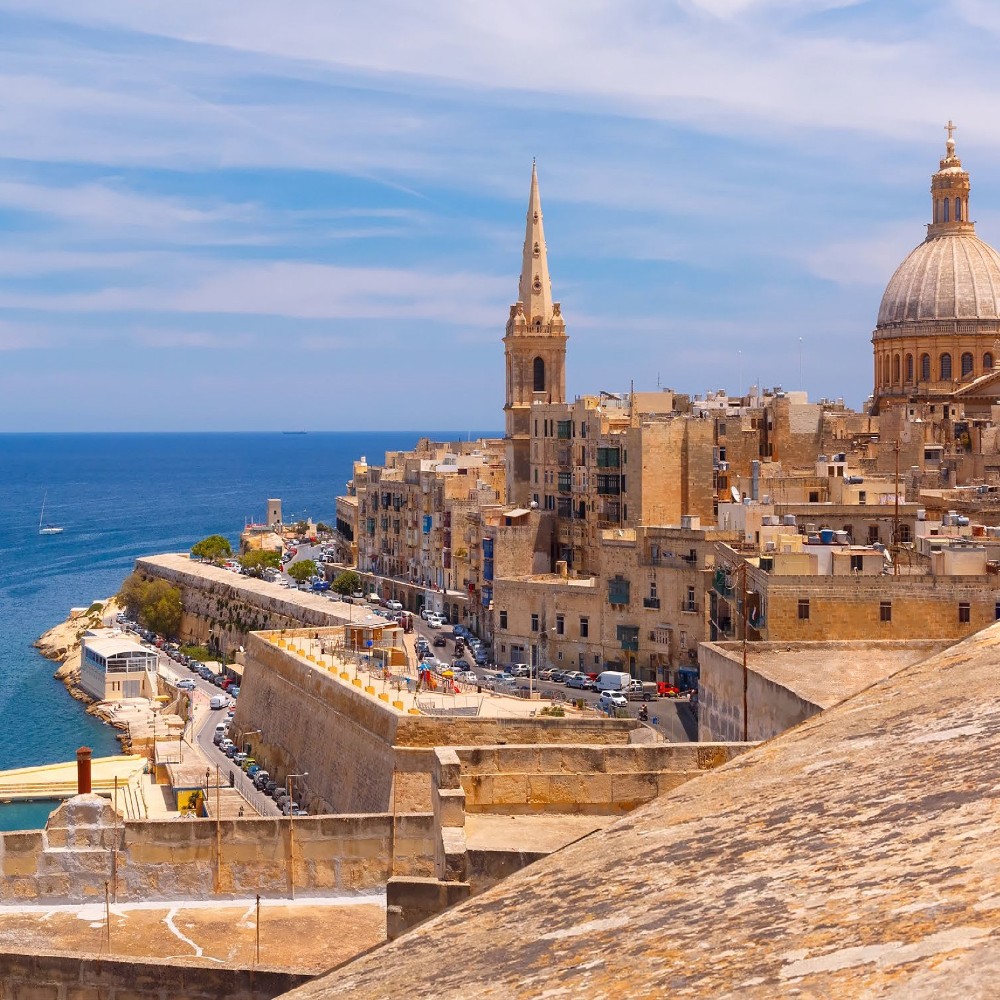
Valletta, UNESCO World Heritage capital of Malta
Malta: best for history-mad kids
Average highs: 21°C in November, 16°C in January, 17°C in March
Sea temperature: 21°C in November, 17°C in January
Direct UK flights: about 3 hours 20 minutes
A fabulous country for adventuring, drenched in history, packed with charm and pleasantly sunny and mild in winter, Malta is a great choice for a family holiday with kids in December or January. The capital, Valletta, is like an enormous heritage playground stuffed with tales of knights, daring exploits, legendary voyages and more than a few bloodthirsty deeds.
The craggy coastline with its caves, grottos, immense cliffs, lagoons and beaches makes most theme-parks seem tame by comparison. And if you want to go sailing, the islands of Gozo and Comino are a ferry crossing from Valletta for a visit, but very tempting to stay on too. On Gozo, older kids can kayak into sea caves, or take a little fishing boat from the Inland Sea at Dwejra through a rock tunnel and out into clear, deep-blue water. The island is also famous for stunning heritage farmhouses converted into family self-catering villas, often with their own pools, all immaculately restored and available year-round.
Winter is a good time to dig into all that history: “our mild temperatures make it easy to explore the island’s rich heritage without the intense summer heat,” says Tolene van der Merwe, director UK & Ireland at Visit Malta. Two of her picks for kids are The Knights of Malta, an audiovisual show with life-size scenes of crusader knights, hidden in the old gunpowder vaults inside Mdina’s bastion walls, and Odyssey in St Julian’s, a flying-theatre ride through Malta’s history, with full-motion seats and special effects.
Where to stay: See our recommended family hotels in Malta
– READ MORE: What to do on a family holiday in Malta –
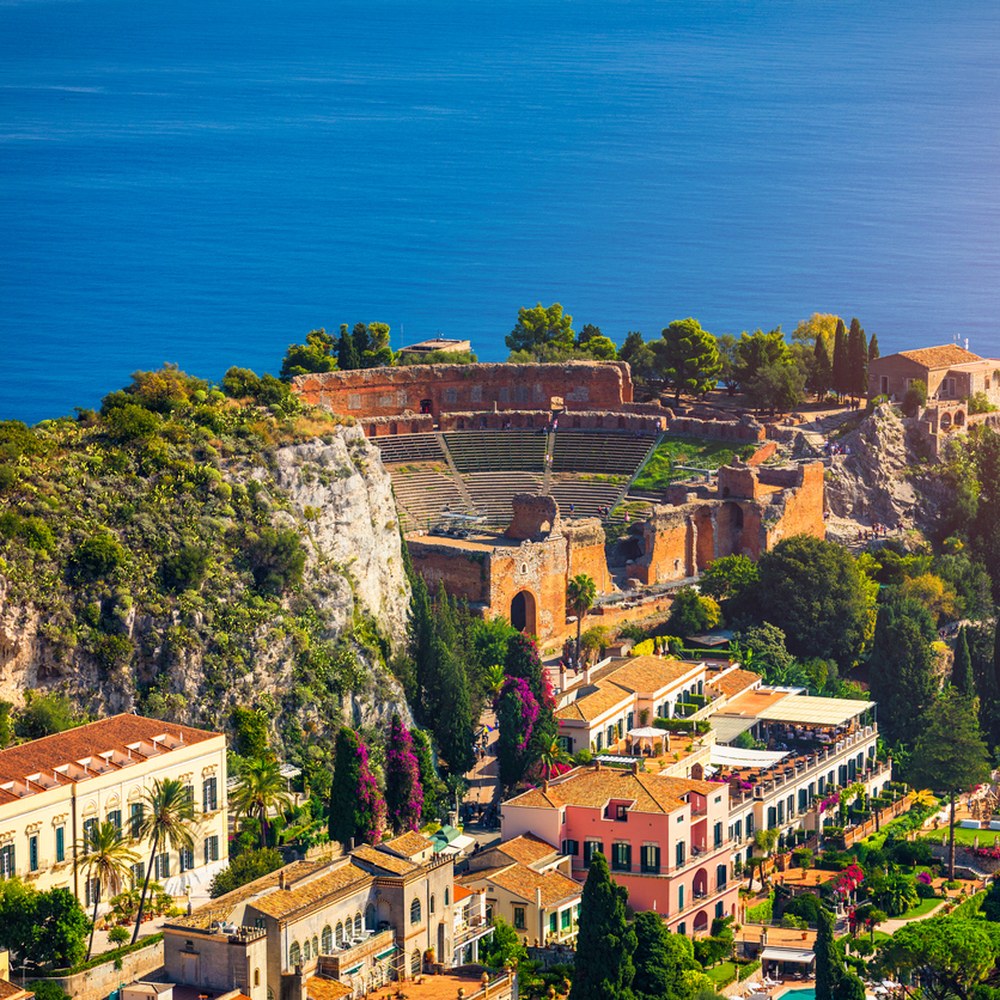
The Greek theatre, Taormina, Sicily © iStock
Sicily: best for volcano adventures
Average highs: 21°C in November, 16°C in January, 18°C in March
Sea temperature: 20°C in November, 16°C in January
Direct UK flights: about 3 hours
The largest of the Mediterranean islands, Sicily is located just off the toe on the ‘boot’ of Italy and has plenty to do with children of all ages. Although not as warm as the Canary Islands, daytime highs in November are still around 20˚C and the south-east is an ideal spot for families. Hiking up Mount Etna, the active volcano near Catania, is a fun and educational activity; kids will love being able to tell their friends that they dared to climb an active volcano! From spring to autumn, the adventure park at Eco Campus Casaboli, about 40 minutes’ drive from Palermo, offers children the opportunity to try rope ladder walking, tree climbing and cable slides, as well as other outdoor activities such as archery and mountain biking.
From spring, families can check out Etna Land, the dinosaur theme park and water park rolled into one- kids can jump on the dinosaur rapids and enjoy cable rides and laser shows. The salt pans of Sicily are also an incredible sight and fantastic photo opportunity, as huge piles of white salt lie between picturesque windmills. Something that families may not know about Sicily is its strong puppet theatre culture. Palermo has several puppet theatres, and you’ll find more in towns across the island. Traditional performances include the battles of Charlemagne and the Saracens and there is even an international puppet museum in Palermo.
On the north coast near Palermo, the medieval seaside town of Cefalù is at its best in October and November, with a long sandy beach, winding lanes and a Norman cathedral full of glittering mosaics. The usual holiday-maker favourites are also to be found on Sicily, with boat trips, beaches and a cable car that goes up to the hilltop town of Erice, famous for its sugar almond treats! Of course, kids’ favourites of pizza and pasta headline on any Sicilian menu (order a mezza portion for children to get a half-portion of adult dishes), as do sweet dishes featuring giant Sicilian lemons.
Where to stay: See our recommended family hotels in Sicily
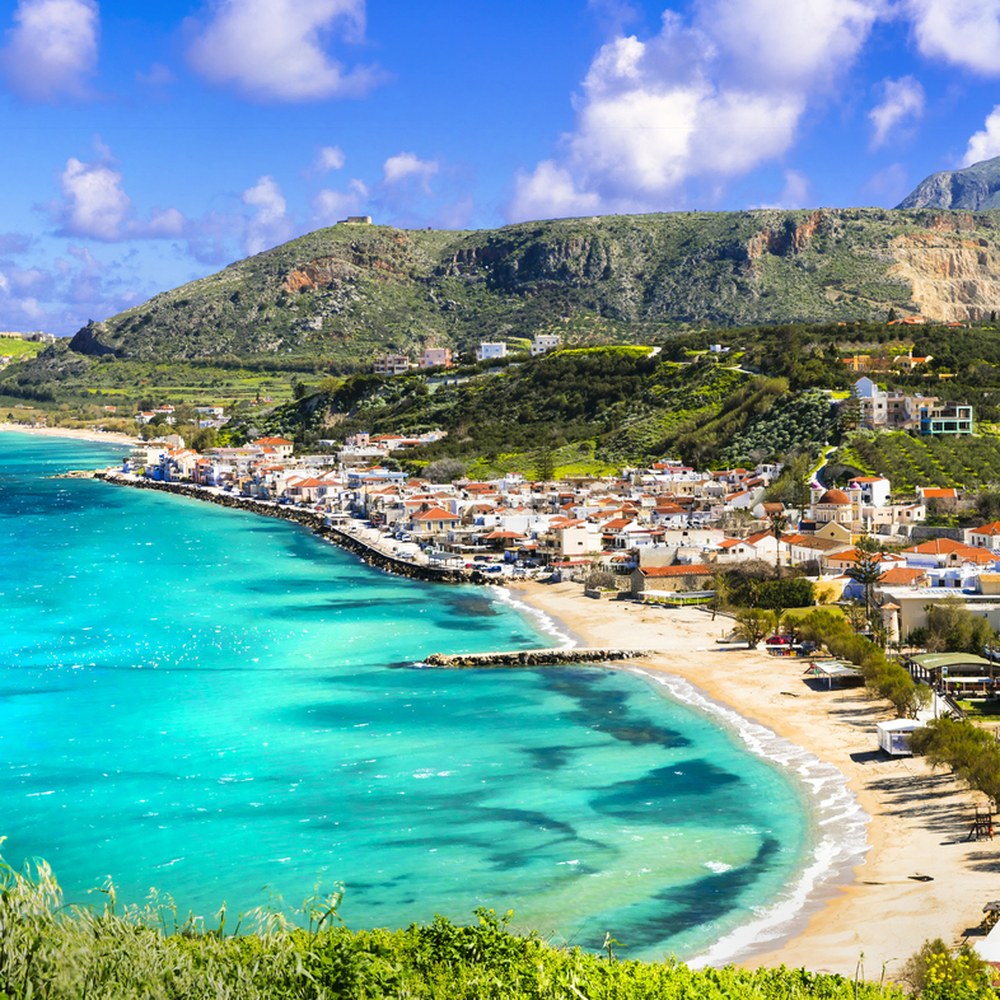
Crete, Greece © iStock
Crete: best for November and spring sun
Average highs: 20°C in November, 15°C in January, 17°C in March
Sea temperature: 21°C in November, 17°C in January
Direct UK flights: about 3 hours 45 minutes
Greece is a popular family holiday destination all year round, and rightly so, though Crete is mild rather than hot in deep winter, so it’s best in November or from March onwards. The sunny weather, fresh and tasty food and scenic vistas all make for a blissful break away with loved ones. Fans of the water can try scuba diving, snorkelling, sea kayaking and paddleboarding off popular family beaches such as Elafonisi and Agia Marina, or Agia Pelagia, a sheltered bay just west of Heraklion. If green hills are more your thing, grab mountain bikes and head up onto the picturesque mountain roads to blow away the cobwebs. Stop in one of the local tavernas for a plate of sfakia pies, giant olives or snifters of Cretan brandy. From May to October, families can hike the famous Samaria Gorge, and heading underground in the spooky Cretan caves is another popular way of exploring the abundant nature and landscape that Crete has to offer.
Aside from spotting geckos around your hotel veranda, animal lovers can get up close and personal with rescued creatures at Aquaworld aquarium and animal centre and visit the Cretaquarium, run by the Hellenic Centre for Marine Research. A great way to incorporate fun education into your family holiday! Kids will also love checking out the prehistoric creatures at Dinosauria theme park, which offers interactive games and trails for little ones. The Minoan Palace in Knossos and Chania’s Old Town are also fantastic days out for when the family wants something more than a relaxing beach day. Some attractions run shorter hours or close in winter, so check before you go.
Where to stay: See our recommended family hotels in Crete
– READ MORE: Where’s warm in Europe in April? –
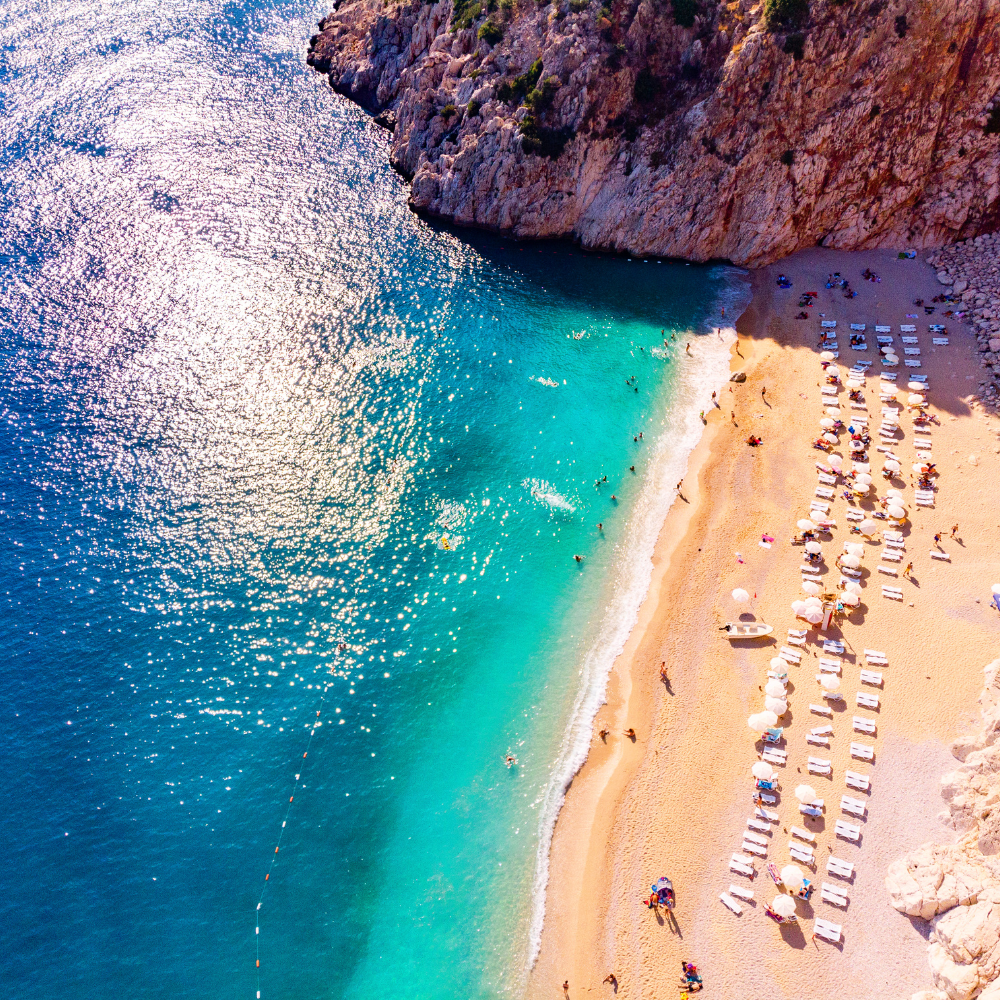
Antalya, Turkey
Turkey’s Turquoise Riviera: best for value
Average highs: 22°C in November, 15°C in January, 19°C in March
Sea temperature: 21°C in November, 18°C in January
Direct UK flights: about 4 hours
Enjoy fantastic value and sunny beaches with an easy winter break on the Turquoise Riviera in Turkey. This ever-popular coast has everything from ancient cities and historic monuments to beautiful beaches, chic resort towns and world famous natural phenomena.
The Turquoise Riviera is also a fantastic holiday destination for families who haven’t been abroad before, or whose children like the familiar comforts of home such as international restaurants and cafes. Turkish people are extremely friendly and warm towards children, and will go out of their way to accommodate them in restaurants, hotels and on day trips. If you fancy exploring the area there are plenty of activities to keep families busy. Local markets are full of Turkish tea, ‘lucky eye’ charms and hand-woven carpets as well as cheap, high-quality leather goods and boxes of Turkish delight for gifts.
The coast is well worth exploring – boat trips leave from Antalya’s old harbour and nearby resorts to visit beaches, coves and waterfalls along the Mediterranean. In winter many beach clubs and waterparks close, so it’s a break for exploring rather than lazing by the pool.
It’s the one winter sun spot where New Year beats Christmas on price: TravelSupermarket found Antalya holidays over New Year averaged £185 per person less than at Christmas.
Where to stay: See our recommended family hotels in Antalya
– READ MORE: Family winter sun holidays further afield –
Frequently asked questions
Where is hot right now in Europe?
From November to March, the Canary Islands are the warmest part of Europe, with Tenerife averaging highs of 22–25°C and Gran Canaria, Lanzarote and Fuerteventura only a degree or so behind. Madeira is close behind at around 20–23°C.
Where is hot in Europe in November?
November is still warm across much of southern Europe. The Canary Islands average 24–25°C, Madeira and Cyprus 23°C, and Malta, Sicily, Antalya, Malaga and Crete 20–22°C, with seas still warm enough for a swim.
Where is hot in Europe in December?
In December, Tenerife (23°C), Gran Canaria, Lanzarote and Fuerteventura (22°C) and Madeira (21°C) are your best bets. Mainland Spain, Malta and Cyprus are pleasant in the sunshine at 17–19°C but not beach-hot.
Where is warm in Europe in January and February?
The Canary Islands are the only reliably warm option, at 21–22°C, followed by Madeira at about 20°C. Elsewhere in the Mediterranean, highs drop to 15–18°C.
Where’s best for winter sun at February half term?
Tenerife and Gran Canaria offer the warmest weather and the most family resorts open in February. Lanzarote and Fuerteventura are slightly shorter flights at around four hours.
Where is hot all year round in Europe?
The Canary Islands, thanks to their position off the coast of Africa. Temperatures rarely drop below 20°C during the day, even in winter.
Is the sea warm enough to swim in Europe in winter?
In the Canaries the sea stays at around 19–20°C in January, which most kids will happily swim in. In the Mediterranean it drops to 15–17°C, so heated pools are a better bet from December to March.
Is it cheaper to go somewhere hot at Christmas or New Year?
Usually Christmas. TravelSupermarket compared seven-night holidays departing 19–24 December with those departing 26–31 December and found Christmas was cheaper in 12 of the 13 winter sun destinations it looked at, by £190 per person on average. Antalya was the exception. “Prices can vary a lot from one departure date to the next, so it’s worth comparing across both weeks before you book,” says Chris Webber, Head of Holidays and Deals at TravelSupermarket.
What’s the shortest flight to winter sun from the UK?
Malaga, at under three hours, is the quickest, followed by Sicily and Malta. They’re mild rather than hot in midwinter, but sunny and great in November and March.
Some of the links in this article are affiliate links. This means we may earn a small commission if you book or purchase through them, at no extra cost to you.