Words by Lauren Jarvis
You’ve read the books, watched the movies and may even have been lucky enough to see the new smash-hit West-End musical, so how about treating your own little cubs to the ultimate Paddington adventure? A holiday meeting the real-life bears behind one of the world’s favourite fictional characters.
First appearing in 1958 in the book A Bear Called Paddington, written by British author Michael Bond, the stowaway from “darkest Peru” is undoubtedly having his day in the sun. With three live-action movies already under his floppy red hat – Paddington; Paddington 2 and Paddington in Peru – this beloved little brown bear has recently roared into London’s Savoy Theatre in Paddington The Musical and onto merchandise from PJs to pencil cases, sold on high streets across the country.
Paddington isn’t just any little brown bear. Bond’s character is based on South America’s only native bear: the Andean or spectacled bear, which gets its nickname from its unique cream face markings that give the appearance of glasses. Found along the Andes Mountains range from western Venezuela to northern Argentina, with a population in Panama, these arboreal bears inhabit cloud forests, grasslands, forests and deserts, scavenging a little meat and feasting on plants and fruits (marmalade sandwiches are mighty hard to come by in the wild).
But while the Arctic’s polar bears and North America’s grizzlies have been attracting nature-loving travellers for decades, these altogether more amicable bears have never been part of a tourist trail, until now.
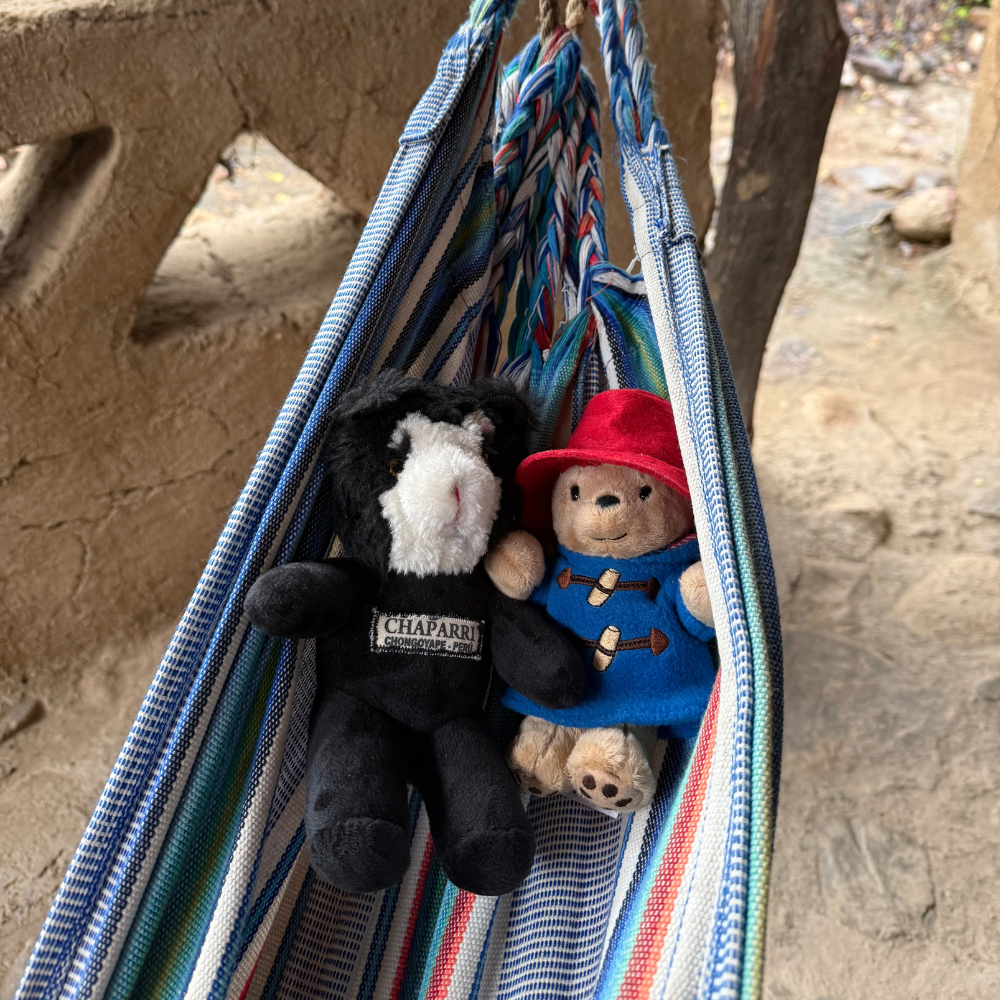
Paddington Bear in a hammock
What is Peru’s new Andean bear tourist route?
“The Tourist Route of the Andean Bear and White-winged Guan” is a new initiative which will protect and raise awareness of two of Peru’s iconic animals: the spectacled bear and the endemic White-winged Guan, a turkey-like black-and-white bird, once driven to near-extinction by hunting and habitat loss.
In Lambayeque, northern Peru, the regional government has given the green light on a circuit that will offer visitors incredible access to both in three protected areas of tropical dry forest: the Bosque de Pómac Historic Sanctuary; Laquipampa Wildlife Refuge; and Chaparrí Ecological Reserve.
“We’re hoping the popularity of Paddington will help to support the conservation of his real-life relatives here in Peru,” says Heinz Plenge, during a walk around Chaparrí, the country’s first private nature reserve and home to the world’s densest population of Andean bears.
A successful wildlife photographer, Heinz worked with the local Santa Catalina de Chongoyape community to secure the protection of 140 square miles of land, which now hosts a reserve, an eco-lodge and a spectacled bear rescue and rehabilitation centre.
– READ MORE: Discover more of Peru –

Hunting for bears in Peru
How do you get to Chaparrí Ecological Reserve from Lima?
Just over an hour’s flight north from the country’s coastal capital, Lima, I touch down in Lambayeque’s premier city of Chiclayo. I’m met by Heinz and his son, Juan, a photographer and guide, who drives me to Chaparrí, which lies in the foothills of the western Andes. For an hour, we’re on a fast, paved road, passing fields of maize, melons and avocados, before reaching the entrance to the reserve, where we’re greeted by a local couple and a few grazing llamas: gatekeepers to the wild.
“We use camera traps to monitor the wildlife here, and they’ve revealed we have around 60 Andean bears,” explains Juan, as we bump along the unsealed road inside the reserve that leads to the lodge. “Chaparrí also protects the White-winged Guan, pumas, pampas cats, opossums, foxes and we have a family of peccaries (pig-like animals), too.”
With low-lying trees and shrubs, this is a dry, rocky land, spiked with cacti and agave, with the sacred Chaparrí Mountain rising to the north. Once the homeland of pre-Spanish cultures, including the Moche, Sicán, Chimú and Inca, modern-day trappings coexist alongside Shamanic ritual, in a realm rich in spiritual significance and archaeological sites.
For families after tales of fallen empires and faraway adventures, this is history heaven, with the ancient city of Túcume and mysterious pyramids of the Bosque de Pómac Historic Sanctuary nearby. But it’s treasures of the furry kind I seek, and with Chaparrí, I strike gold.
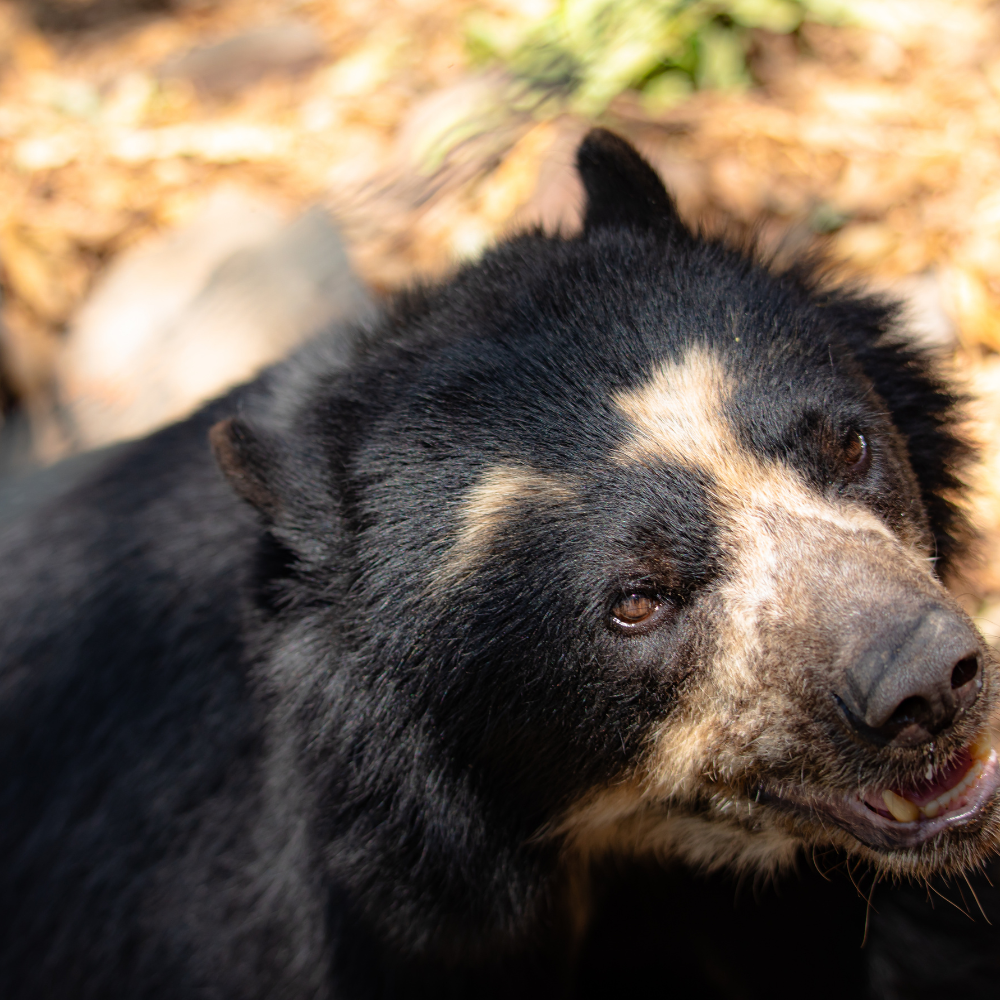
Bear at Chaparrí Ecological Reserve
What’s it like to see Paddington bears in Peru?
Arriving at the lodge, Juan leads me across a short suspension bridge to one of the 12 rustic, adobe en-suite rooms, inspired by Indigenous Moche design and powered by solar. After a lunch of salad, plantain and bean stew overlooking the mountain (Aunt Lucy would approve), I follow Juan and his father through the forest to meet the reserve’s rescued bears, as powder-blue morpho butterflies dance through bougainvillaea above.
Expecting to see bears in their enclosures, instead I have a surprise in store. Peering down at me through the quaking branches of a vast fig tree is Paddington – minus his duffel and Wellington boots, but sporting a look that clearly says, “Please look after this bear.” Just months old, the little cub ventures higher into the canopy, showing off his climbing skills, peeping to check that his new fanbase remains transfixed. Across a mirrored pond, languidly reflecting the tree, Paddington’s mother, Lina, casually claws a fig, unphased by the arboreal escapades of her son.
“Lina was rescued from captivity, rehabilitated here at the reserve and escaped into the wild when she was ready to go,” laughs Juan. “But since she’s had her cub, she regularly returns. In the mountains, life is tough, looking for food and water. Here, she feels safe. If I was a bear, this is where I’d want to be.” As Paddington tells his adopted family, the Browns, in his latest big-screen adventure, “They (the bears) are my tribe, but you are my family”.
– READ MORE: Why family adventure holidays to Latin America are easier than you think –
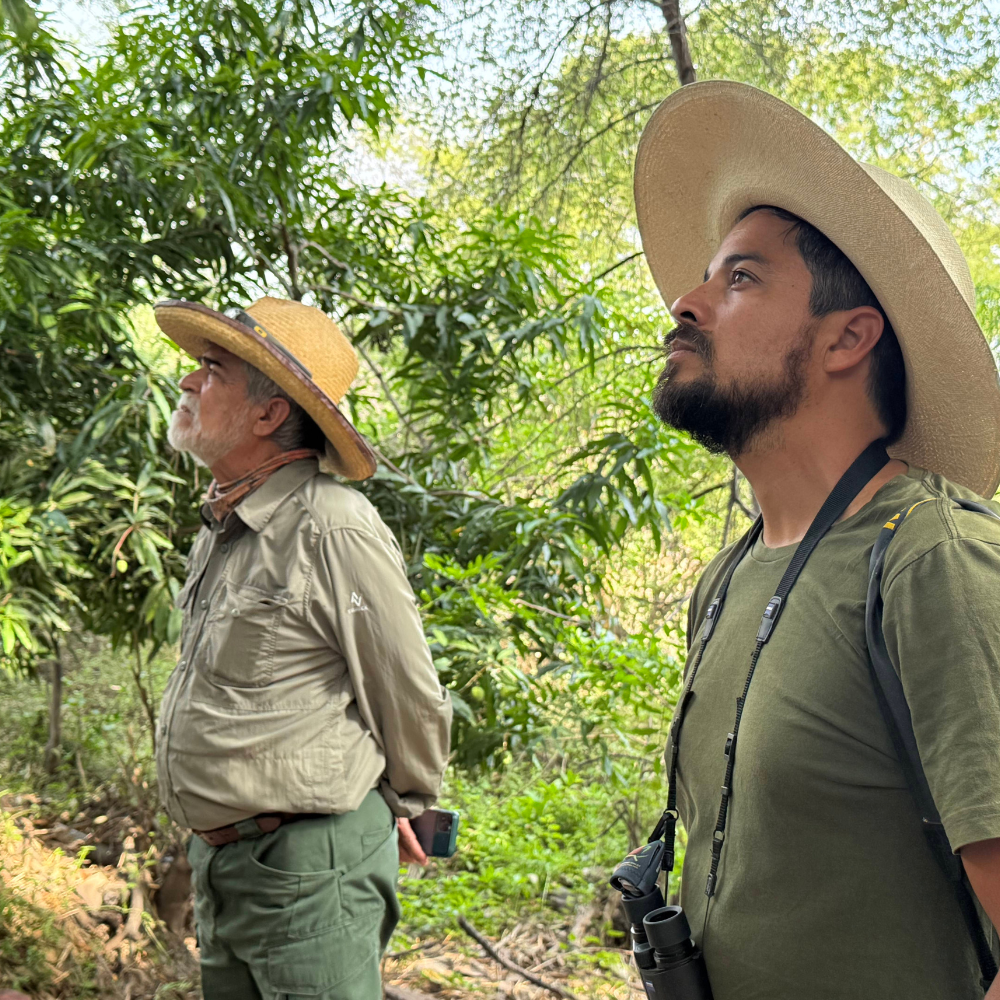
Looking out for bears in Peru
Are spectacled bears in Peru safe to see with children?
This movie-worthy scene plays out just metres away, with Lina and her cub free, unfenced and unfazed by their captivated audience. Unlike their larger cousins, the mid-sized Andean bear isn’t aggressive, and there are no recorded attacks on humans.
Still impressive – a male can weigh up to 200kg – bears are targeted by illegal hunting, while their docile nature has led to them being kept as pets or used in circuses. And, like wildlife everywhere, Peru’s bears are also navigating climate change and human-animal conflict.
Environmental service teams rescue the bears and Chaparrí heals and restores them to health, while conducting behavioural research. Welcoming about 7,000 visitors a year, fees from the reserve and lodge have helped to build a school and support other local initiatives. During my stay, a student party arrives; educating the next generation of custodians is key.
“You’d be surprised how many Peruvians are unaware they’re sharing their homeland with spectacled bears,” smiles Heinz, as we view a mother bear and her daughter devouring mangoes in one of the large rehabilitation enclosures. Although endearing statues honouring Paddington stand in Parque Salazar along Lima’s Miraflores Boardwalk and on a bench in the town of Aguas Calientes near Peru’s most-visited site, the UNESCO-listed Machu Picchu, some remain oblivious to his connection to Peru.
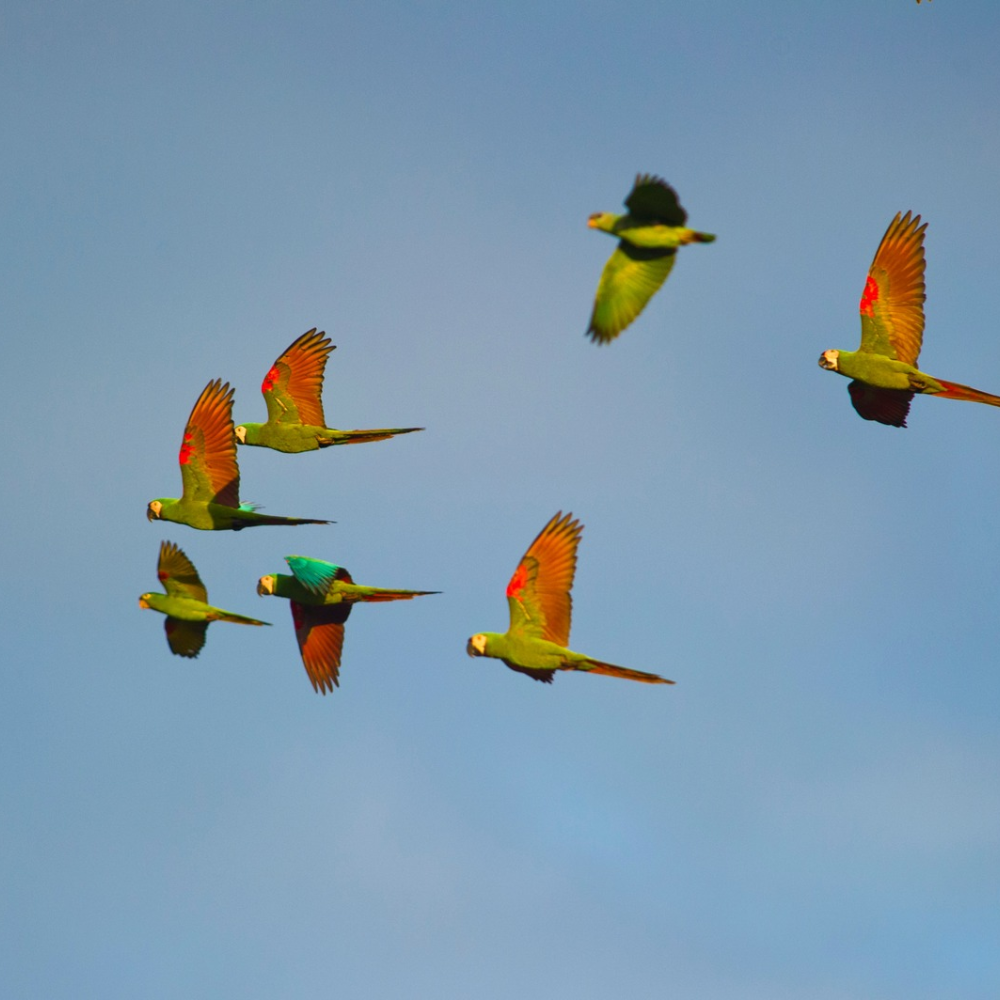
Colourful birds flying in Peru
What other wildlife can kids spot at Chaparrí in Peru?
“We welcome lots of domestic tourists, but the majority come to spot some of the 290 species of birds we have here,” Heinz continues. Of these, the White-winged Guan is one of the rarest, yet easiest to spot, raucously perching on trees around the lodge, while Andean condors effortlessly vie for attention, soaring on thermals above Chaparrí peak.
The following day, I leave my cosy cabin at sunrise to experience some avian wizardry of a smaller, but no less spectacular, kind. Dawn summons iridescent hummingbirds to drink and bathe at a fountain in a forest grove, their ever-beating wings whizzing them back and forth a few metres from my face, as I watch the fairytale unfold. For children, real life doesn’t get more magical than this.
Strolling to breakfast across a jungle suspension bridge; reading storybooks swinging in a hammock; watching stingless bees get busy making honey; and sharing mealtimes with friendly foxes are all experiences that dreams are made of. The bears’ enchanted realm could inspire your own intrepid little explorer to “start planning some adventures, both big and small.”
Stay a little longer at Wayqecha Biological Station
While they are trickier to spot in the vast UNESCO World Heritage-listed wonderland of Manu National Park, wild spectacled bears roam the park’s forested slopes, where the Andes meet the Amazon lowlands.
Visitors keen to know more about the bears can stay at the wonderful Wayqecha Biological Station, which borders the park and offers the opportunity to learn from Conservación Amazónica scientists working on the frontline of conservation in Peru, surrounded by stunning cloud forest views. A stay at Wayqecha Biological Station Lodge costs from US$160 per night in a double room.
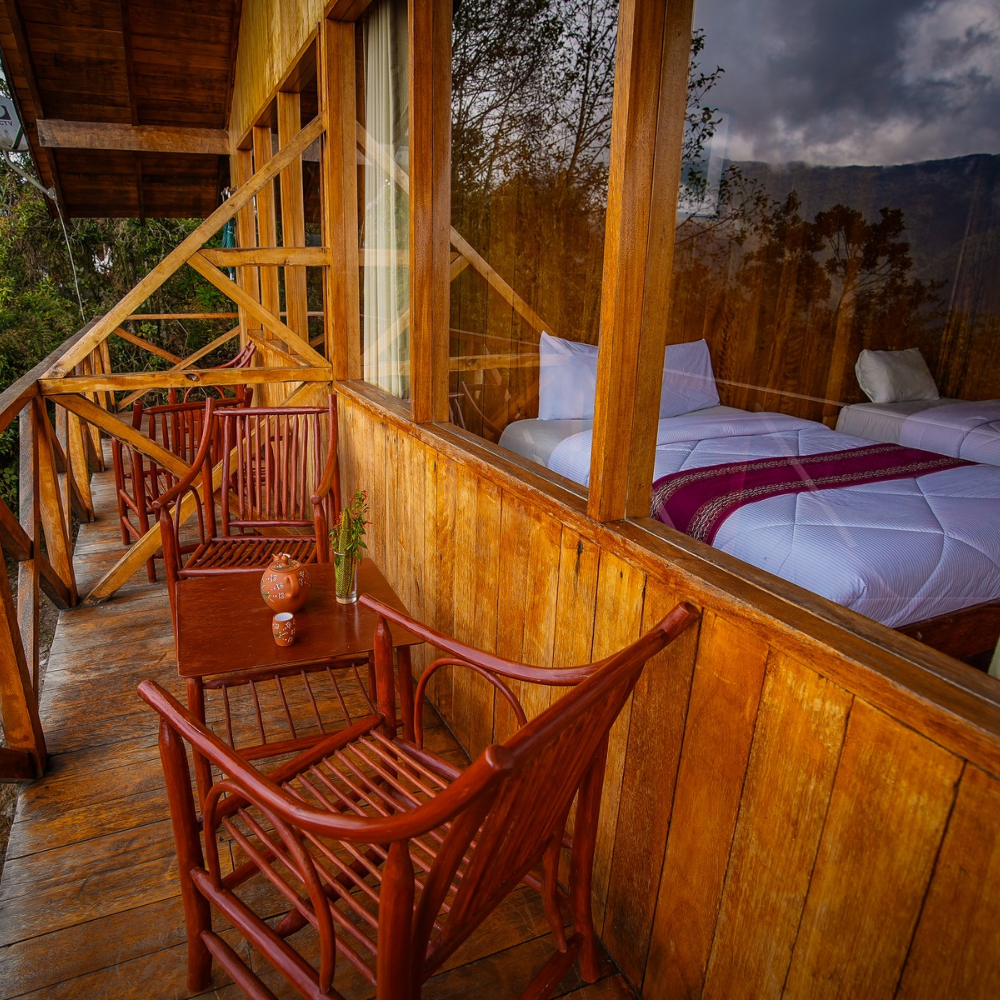
A stay at Wayqecha Biological Station Lodge costs from US$160 per night
Make it happen
Before you go
Paddington The Musical is booking at the Savoy Theatre until 13 February 2028 and is recommended for ages six and up, the perfect warm-up for your Peruvian adventure.
Book it
Windows on the Wild has an eight-day Wild Peru holiday from £3,035pp, based on two sharing. The price includes all flights and transfers, a sightseeing tour of Lima and guided walks in Chaparrí and Wayqecha.
Where to stay
The trip includes two nights’ B&B in Lima, two nights’ full board at Chaparrí Ecological Reserve, two nights’ B&B in Cusco and two nights’ full board at Wayqecha Biological Station Lodge.
Book now at windowsonthewild.com
Some of the links in this article are affiliate links. This means we may earn a small commission if you book or purchase through them, at no extra cost to you.